There’s a good chance your best creative web design ideas didn’t come while sitting at your desk. They came on a walk, in a cafe, or somewhere far from a screen. And that’s not just a coincidence.
The spaces around you influence how your brain forms connections and arrives at original ideas. Most designers overlook this entirely, and that’s usually when their work starts feeling stale.
At Philadelphia Bar and Restaurant, we’ve spent years working with creative teams and watching what separates consistently strong designers from those who hit walls. This guide covers how your surroundings influence your design thinking, which spaces fuel creativity, and what practical changes actually help.
How Design Thinking Connects to the Space Around You
Design thinking is a problem-solving approach that puts the user’s needs at the centre of every decision.
It moves through stages: observing, empathising, ideating, prototyping, and testing. The designers who work through this process most effectively tend to be intentional about where they work.
Now, let’s look at how space plays into each of those stages.
What Design Thinking Actually Means
At its most practical level, design thinking is about understanding the people who will use your websites before deciding how to build them. It pushes web developers and designers to ask better questions early, which leads to stronger solutions later.
The designers who struggle most with this, in our experience, tend to be working in spaces that constantly interrupt their train of thought (and most people don’t clock this until a project goes sideways).
A noisy, cluttered environment makes it harder to empathise with users or sit with a problem long enough to identify real solutions.
How Your Space Either Supports or Blocks It
Your physical space influences every stage of the design thinking process.
Spatial design research shows that environments with variety, openness, and visual stimulation consistently support more creative and innovative ideas during ideation phases. A calm space helps during research and empathy work, while something more stimulating tends to serve better once ideation kicks in.
Bottom Line: Matching your environment to each phase gives your team a noticeably better shot at producing stronger, more considered output.
Types of Environments That Fuel Web Design Creativity
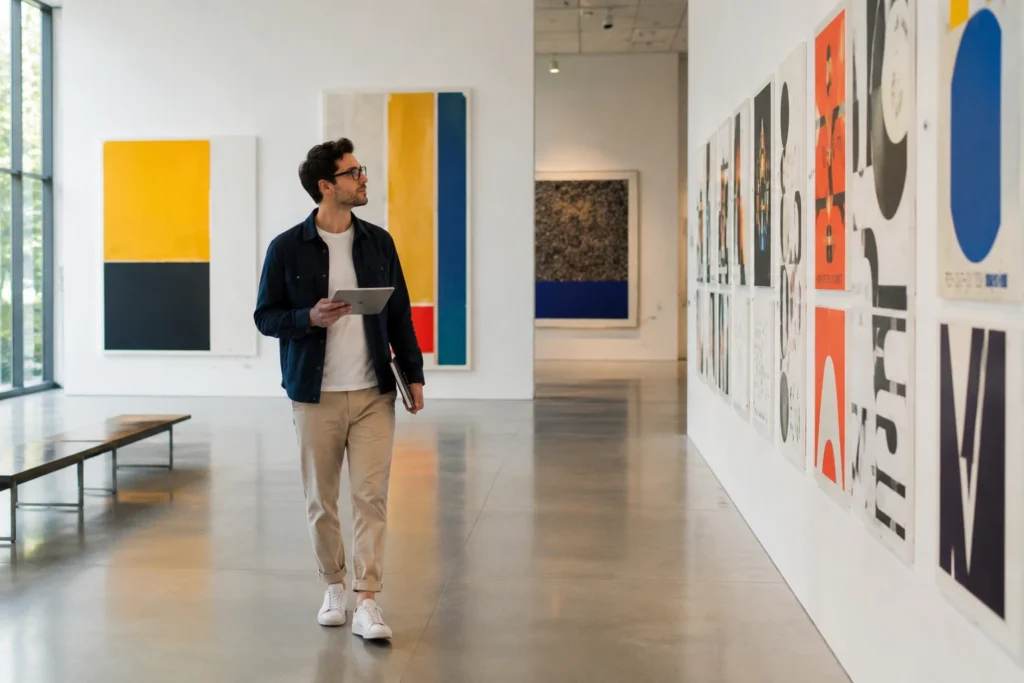
If you’ve ever hit a creative wall mid-project, the instinct is usually to look at more websites for inspiration.
And honestly, some of the best creative web design ideas don’t come from looking at other websites at all. In fact, the physical world around you is one of the most underused design inspiration sources available, and different environments tend to reveal very different kinds of thinking.
Here’s a breakdown of the spaces designers draw from most, and what each one brings to the creative process:
| Environment | What It Inspires |
| Cafes | Ambient noise and social energy loosen up ideation and help generate a higher volume of ideas |
| Co-working spaces | Exposure to other creative teams and web developers, which naturally sparks fresh perspectives |
| Nature settings | Organic shapes, colour palettes, and a slower pace that feeds visual design thinking |
| Art galleries and studios | Strong visual references for layout, contrast, and creative agency aesthetics |
| Your own city or neighbourhood | Local culture and design style that grounds your work in something users can actually connect with |
The connection between place and creative output is something designers often discover too late. Designers who draw from their local culture and surroundings, much like the way Philadelphia’s creative spirit shapes Queensland web design, tend to produce websites that feel distinct rather than templated.
Once that’s established, the next step is building a routine around it.
Applying the Design Thinking Process to Your Creative Routine
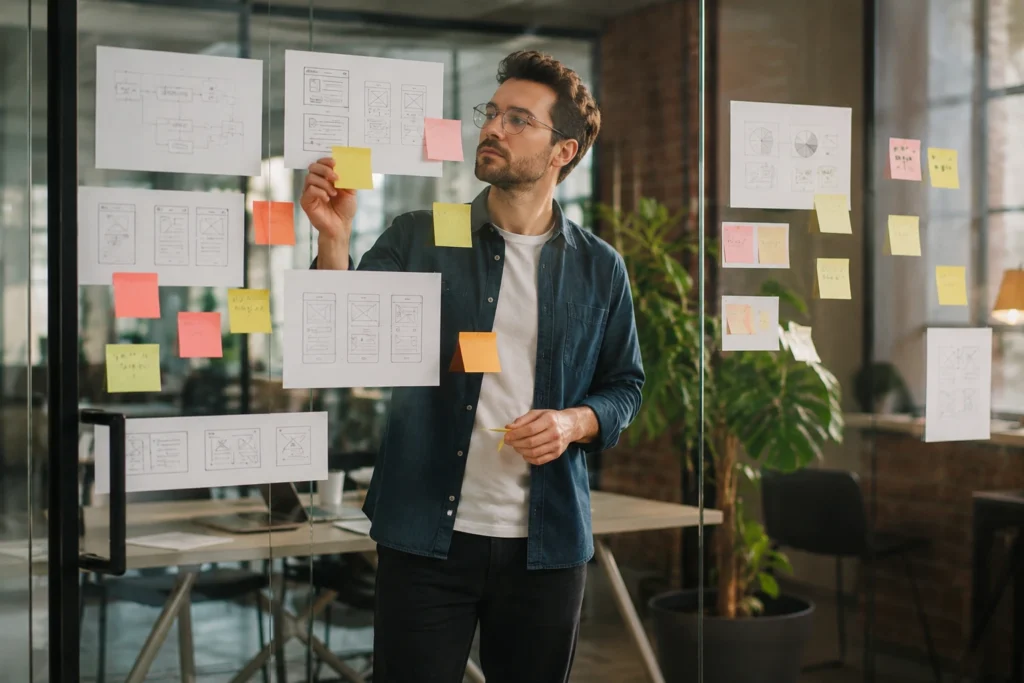
The design thinking process works best when your environment is set up to support each stage of how you think and create.
In fact, most web developers and designers keep their workspace exactly the same regardless of which phase they’re in. But different stages of the design thinking process call for genuinely different settings. And matching the two directly improves the quality of ideas you bring to your projects.
This is what that looks like in practice:
- Empathy and Research: Find a quiet, low-distraction space during this phase, because understanding users deeply requires the kind of sustained focus that constant noise and interruptions actively disrupt.
- Ideation: A cafe or co-working space works well here. The ambient energy and exposure to other creative teams help loosen up your thinking and surface ideas that a quiet, static setting rarely produces.
- Prototyping: This phase involves precise decisions about layout, features, and visual elements, so an organised, clutter-free workspace gives you the clear headspace to translate ideas into actual design solutions without losing the thread.
- Testing: Pull in other web developers and designers during testing phases. Fresh eyes catch usability issues and give you honest feedback on how real users will experience your websites (skipping this step is how you end up redesigning the same thing three times).
Matching your environment to where you are in the design thinking process is something we’ve seen make a measurable difference, particularly during the ideation phase.
Designers who build this kind of environment awareness into their creative process consistently produce more considered websites and sharper design decisions. And once that habit is in place, the smaller everyday adjustments start to make a lot more sense.
Small Changes That Help You Do Your Best Work
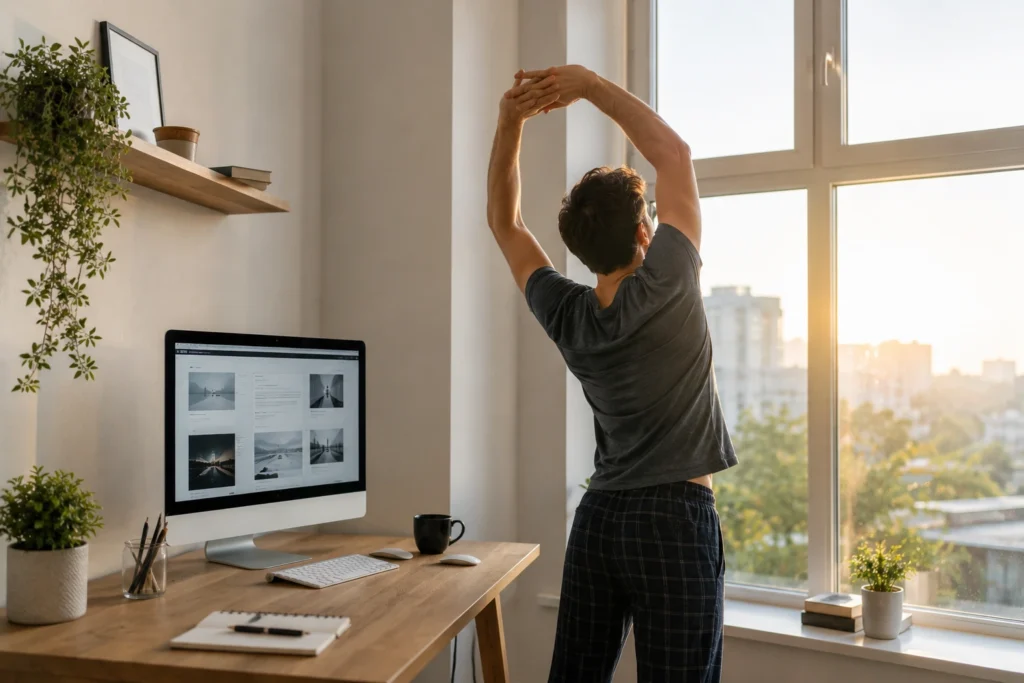
Your workspace is either helping your thinking or quietly working against it. Most designers don’t realise how much their immediate setup shapes the quality of ideas they produce.
These are the four adjustments that tend to make the most immediate difference:
- Adjust Your Lighting: Natural light has a measurable impact on creative output. Research shows that lighting, plants, and spatial variety directly improve creative thinking. So even repositioning your desk near a window gives your brain noticeably more room to generate and develop ideas during a design session.
- Reduce Digital Clutter: Clear your desktop and close anything unrelated to your current design thinking process (a cluttered desktop is still a cluttered desk, just a digital one). Fewer visual distractions on screen means your focus stays on the design problem rather than drifting between competing tabs and tools.
- Add Greenery: A plant or two isn’t purely decorative. Natural elements have a calming effect that supports sustained focus, which is particularly useful during research and prototyping phases when deep concentration directly affects output quality.
- Take Breaks Away From Your Screen: Stepping away from your websites and tools for even ten minutes in a different physical space helps reset your thinking. You come back with a clearer head and a fresh perspective on the design decisions you were wrestling with before the break.
Small as they seem, adjustments like these create the kind of environment where focused, original web design thinking actually has room to develop.
Better Web Design Starts With the World Around You
The irony is that the best design thinking often happens away from the design tools entirely.
Strong web design grows from what you notice, absorb, and carry back to your work from the world around you. And designers who stay curious about their surroundings consistently bring fresher ideas to their websites than those who stay fixed to a screen.
Ultimately, the creative process doesn’t start when you open your design software. It begins the moment you step outside, pay attention, and let the world feed your work.