Your surroundings, like natural light, the colours and textures around you, and the websites you browse daily, change how you generate design ideas. In fact, walking increases creative output by an average of 60% compared to sitting at a desk.
Even small adjustments to your physical space and digital feeds can unlock stronger creative web design ideas without any fancy office upgrades.
In this article, you’ll discover how workspace lighting and organisation patterns affect your ability to create modern web design. We’ll also show you specific places beyond your screen where web developers find inspiration, plus time-blocking habits that train your brain to think more creatively on demand.
Let’s find out how your environment can inspire creative ideas.
What Sparks Creative Web Design Ideas?
Your physical workspace directly affects your ability to generate creative web design ideas through lighting, colour choices, and organisation levels. The setup around you either fuels fresh thinking or drains it before you even open your design software.
Take a look at the two most common workspace elements that influence design creativity the most.
Natural Light and Colour Psychology in Design Workspaces
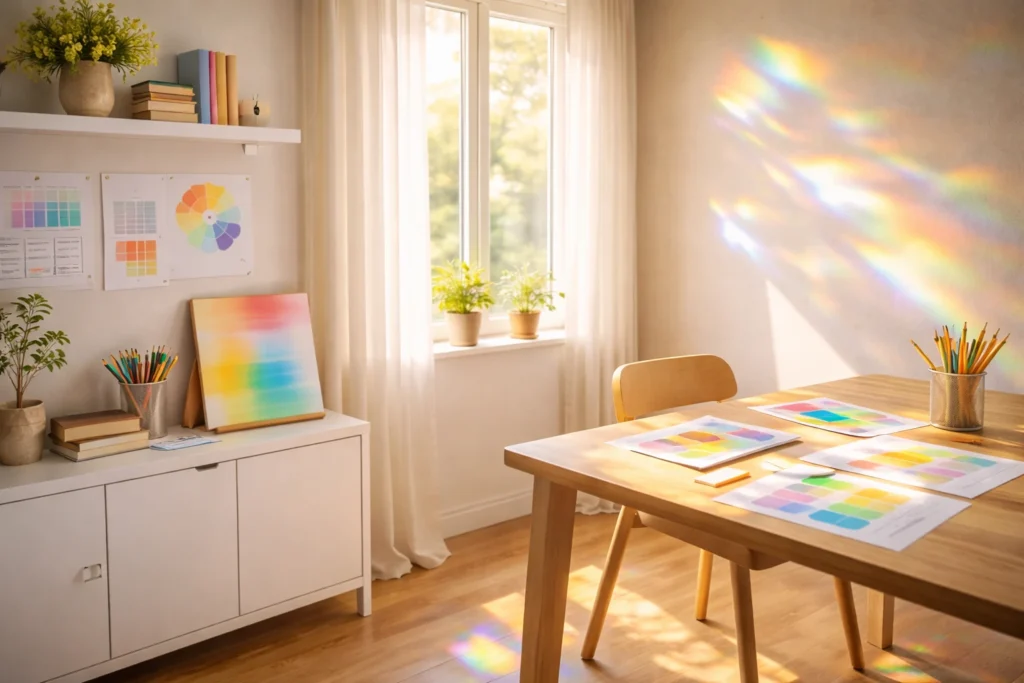
Optimising your workspace lighting costs absolutely nothing and improves your design output within days. It’s because natural light boosts mood and energy, which directly impacts your ability to generate fresh design concepts throughout the day.
Here’s another secret: wall colours influence emotional states. For example, cooler tones like blues and greens promote focus during technical work. Meanwhile, warmer colours like yellows encourage creative risk-taking when you’re brainstorming layouts.
What’s more, window placement and desk orientation directly affect focus, eye strain, and how consistently you generate strong design ideas throughout the day. Say, if your desk faces a blank wall all day, you’re basically working against yourself.
Clutter or Order Affects Your Design Output
Visual chaos on your desk often translates to cluttered, unfocused layouts in your web design work. Like when you’re surrounded by random papers, coffee cups, and tangled cables, your brain unconsciously mirrors that disorder in the websites you create. You won’t even notice this connection until you clean up and see the difference.
As a result, minimalist workspaces help web developers concentrate on clean, purposeful design decisions without distractions pulling their attention in five directions at once. Even in our collaboration with freelance designers, we’ve seen those with organised desks consistently deliver cleaner, more focused website layouts than those working in chaos.
Sources of Design Inspiration for Web Developers
The beauty of finding inspiration outside your screen is that it refreshes your perspective faster than any design blog. In fact, some of the best creative web design ideas come from completely unrelated environments.
Here’s where web developers find inspiration to improve their work:
- Nature Walks And Outdoor Patterns: Organic colour gradients, textures, and movement patterns often translate into web interfaces. For instance, water ripples show you movement, or tree bark textures can inspire backgrounds. So when you pay attention during walks, you’ll start seeing how natural colour combinations work together.
- Urban Typography and Architecture: Most modern web design layouts pull directly from architectural principles, whether designers realise it or not. Even shop windows can teach visual balance and whitespace through product placement.
- Museums, Galleries, and Visual Composition: How paintings guide your eye through a canvas works the same way websites should guide users through content. In fact, the spacing between art pieces in galleries teaches proper content breathing room.
- Public Spaces For Behaviour Observation: A great way to study behaviour is to observe coffee shops. Because the people there reveal the same eye patterns they’ll use on your website. Particularly, queue navigation in busy spaces shows you how users look for the path of least resistance.
These approaches train your eye to recognise patterns that work in the real world. Only then can you adapt those principles to modern web design projects.
Digital Environment: Curating What You See Online
The websites you visit, the designers you follow, and the content you consume daily all program how you think about design. So if you’re only seeing the same recycled trends on social media, your work will reflect that limitation.
Let’s talk about two ways to curate better digital inspiration for modern web design.
Following The Best Website Designs Of 2026 For Daily Inspiration
Platforms like Awwwards and CSS Design Awards showcase innovative examples in modern web design without relying on tired templates. These sites feature work from designers who experiment with layout, animation, and user interaction in unique ways.
Along with that, studying award-winning sites like Phamily Pharma reveals how functionality and aesthetics merge in the best website designs that serve users well.
The platform you choose doesn’t have to be expensive or exclusive. Free portfolio sites and design communities work just as well. In any case, reviewing design showcases regularly trains your eye to spot trends, techniques, and micro-interactions worth experimenting with in your own projects. And you’ll start noticing subtle differences between good websites and great ones.
Building Mood Boards That Influence Your Work
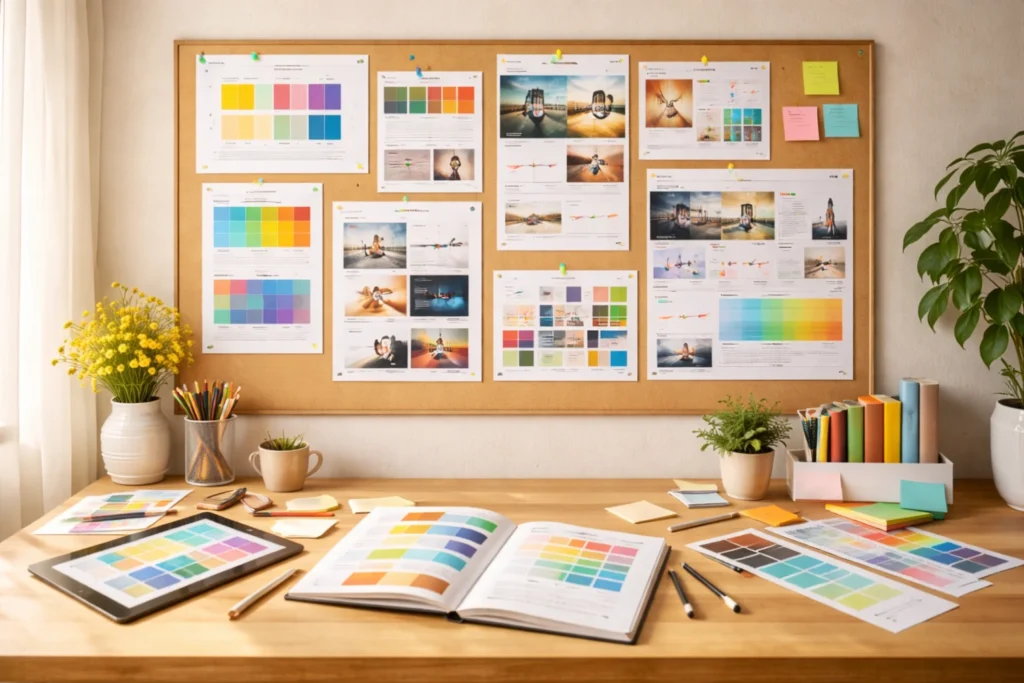
The fastest way to improve your modern web design is to have a mood board that you reference before every project. We’ve seen many web developers skip this step and jump straight into code. But that’s a mistake, because mood boards give you a visual direction before you write a single line of HTML.
Here’s how to build mood boards that help your creative process:
- Collect Screenshots Strategically: One way is to save colour palettes, typography pairings, and layout structures from carefully crafted websites for quick reference. But don’t just screenshot entire homepages. Instead, capture specific elements like navigation styles, button designs, or card layouts that solve design problems.
- Organise By Project Type Or Emotion: You can also sort inspiration by project type or emotion rather than dumping everything into one folder. Say, create separate boards for e-commerce sites, portfolios, landing pages, and editorial layouts. Or organise by feeling: energetic, minimal, luxurious, playful.
- Refresh Monthly and Remove Stale Ideas: After collecting the screenshots, revisit and refresh your mood boards monthly to keep creative web design ideas flowing and relevant. Because what looked fresh six months ago might feel dated now. During the process, delete anything that no longer excites you.
Mood boards give you a visual library that sparks ideas when you’re stuck or starting a new website project. Over time, they also sharpen your design instincts by exposing you to recurring patterns and styles that work.
Building Creative Habits as a Web Developer
You can train your brain for better creativity through time-blocking and intentional practice habits (skills always beat innate talent). These habits separate designers who constantly struggle from those who generate ideas on demand.
Take a look at two proven methods that train your brain.
Time-Blocking for Exploration vs. Execution
Separating your exploration time from execution prevents that paralysing feeling of having too many ideas mid-project.
For this problem, dedicate specific morning hours to browsing design inspiration without the pressure of immediate client work or deadlines looming over you. This gives your brain permission to wander through design showcases, experiment with colour palettes, and study layouts without needing to produce anything.
After that, reserve afternoons for production work when your brain has absorbed fresh creative web design ideas, and you’re ready to execute.
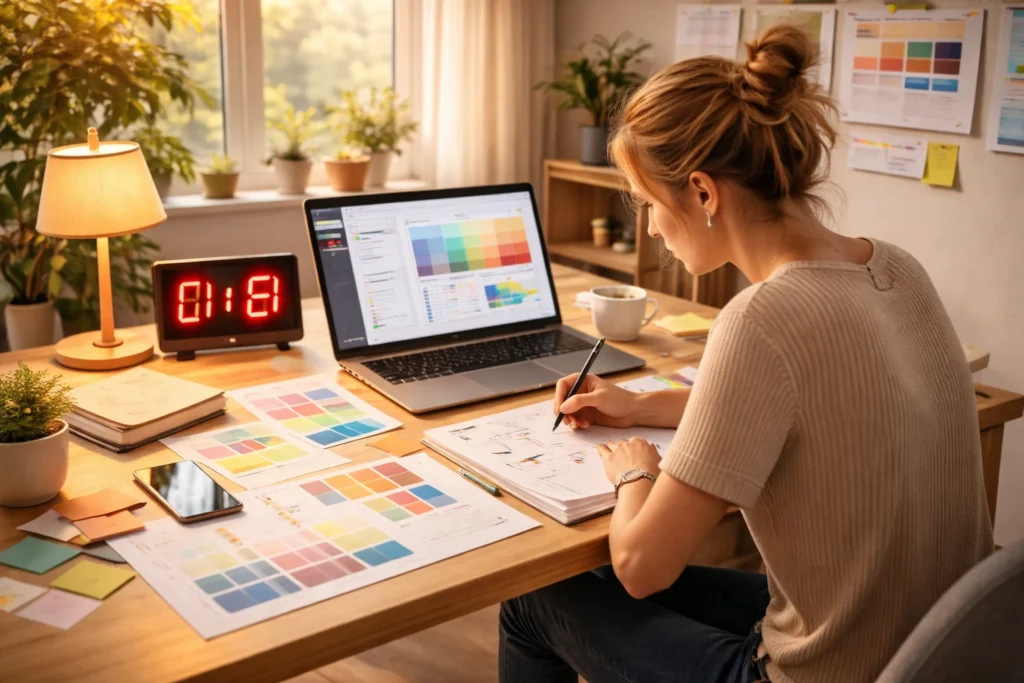
Our hands-on trials with this schedule revealed that web developers who split their day this way finished projects much faster than those who mixed exploration and execution randomly. It’s because when you jump between browsing inspiration and writing code, your brain wastes energy refocusing.
So separating exploration time from execution time prevents design paralysis and keeps projects moving forward.
Working With Limitations Improves Modern Web Design
Why do some web developers produce their best work when they have the tightest constraints?
It’s because budget restrictions force web developers to prioritise core design elements and eliminate visual noise that doesn’t serve a purpose. For example, when you can’t afford custom illustrations or premium stock photos, you learn to make typography, spacing, and colour do the heavy lifting.
Also, tight deadlines remove overthinking tendencies and push you toward confident, decisive design choices (sometimes, less is more pays off in unexpected ways). So you stop obsessing over pixel-perfect shadows and start focusing on whether the design actually communicates the message.
Think Outside Your Creative Space
Your environment influences your design decisions, like layout choices and colour palette selections. As a result, physical workspace improvements, outdoor inspiration hunting, and curated digital feeds all contribute to stronger creative web design ideas over time.
You don’t need a complete overhaul to see results. Even small adjustments to your surroundings compound into better design thinking over time. Your next breakthrough in modern web design might come from something as simple as changing where you sit.
If you’re looking for a web design that understands how the environment influences great work, visit our website. The team at Philadelphia Bar and Restaurant knows this connection when building sites that leave an impression.