Most designers will tell you that getting better means buying better tools. A faster computer, a newer plugin, a shinier subscription. But the designers who produce work that actually stops people mid-scroll aren’t winning because of their software.
Actually, they’re winning because of passion, and that’s a harder thing to teach. It pushes you to sit with an idea longer, question the obvious, and try something that feels a little risky.
This passion reforms how you see the world, how you gather inspiration, and how original your ideas end up being. In this article, we look at how passion influences creative thinking, originality, problem-solving, and the kind of web design people actually connect with.
Web Design Creativity Mindset: What Nobody Tells You at the Start
A web design creativity mindset means approaching every project with curiosity first, and software second. Most designers start thinking the job is mostly technical, and to be fair, the skills matter.
Here’s what nobody really talks about: the designers who consistently produce original work aren’t just more talented. Passion is what keeps them inspired when a brief is vague, a client is indecisive, or a design just isn’t clicking.
The tools help you execute. But creativity is what gives you something worth executing in the first place. A solid web design creativity mindset is the foundation on which the entire design process is built, and it’s the one thing no software update will ever hand you.
Fresh Ideas Don’t Come From Staring at a Screen

If your best ideas have ever hit you in the shower, on a walk, or anywhere but your desk, there’s a good reason for that. The brain doesn’t produce fresh ideas on demand, especially when you’re staring at the same screen you’ve been staring at for six hours.
Sometimes the most productive thing a creative person can do is step away. Spend time outside, explore something unfamiliar, or just do something fun that has nothing to do with design.
The trick is learning where to look and how your personal life can quietly feed your best work. That’s exactly what the next two sections focus on.
Where Do Innovative Ideas Actually Come From?
The good news is that finding fresh inspiration gets a lot easier once you stop looking at other websites for it. Innovative ideas come from exposure to different perspectives, different fields, and different ways of seeing.
Here’s where designers actually find their best insights:
- Great web design is often inspired by painters, illustrators, and art movements that have nothing to do with the industry.
- Tracing a design style back to its source gives you a sharper eye and a more distinct voice in your own work.
- Designers who pull from original artists rather than other websites are the ones whose work leads to unexpected breakthroughs, not just polished imitations.
Looking outside the web design bubble helps you develop ideas that feel less predictable. That’s often the difference between work people forget in seconds and work that actually sticks with them.
Personal Life as a Creative Fuel Source
Now that we’ve covered where ideas come from, let’s look at the closest source of inspiration you already have: your own life. The things you do outside of work reform how you think inside of it.
Let’s see how your personal life feeds your creative career:
- Your hobbies, relationships, and everyday routines give you diverse perspectives that you simply can’t get from a design tutorial.
- Designers who maintain a healthy balance between work and life tend to approach briefs with more depth and fewer clichés.
- Spending time with friends, exploring new places, or picking up a new skill helps you connect dots that purely screen-focused designers often miss.
A balanced life gives designers more emotional range to draw from, and that usually shows up in the work. The ideas feel less recycled because they’re structured by real experiences, not just another afternoon scrolling through design galleries.
Can Playing Video Games Make You a Better Designer?
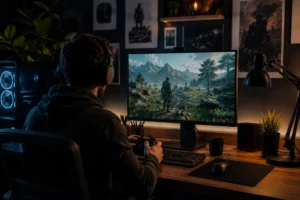
It sounds like a stretch, but the design principles behind great games and great websites have more in common than most people realise. When you play video games, you’re not just having fun. You’re absorbing how interfaces work, how users are guided through a space, and how visual decisions create feeling.
That’s genuinely useful for design work. Here’s why:
- Video games are built on visual hierarchy, interface design, and how users move through a space, which maps directly onto how websites are structured.
- Playing games trains your eye for colour, pacing, and the way interaction defines a user’s experience, which gives you different ideas you wouldn’t get from a design brief.
The designers who pull ideas from places outside the industry usually end up with work that feels fresher and more memorable. Games train you to think about movement, interaction, and flow in ways that naturally carry over into stronger web experiences.
Stoke the Fire: Creative Habits That Keep Ideas Flowing
The best part about building creative habits is that they stack. Even ten minutes a day of something creative outside your usual work adds up faster than you’d expect. This isn’t just feel-good advice either; there’s actual science behind it.
Repeated creative work strengthens the brain over time. New ideas and problem-solving start to feel more natural with practice. That’s one reason experienced designers often think faster and more creatively.
Creative hobbies build the same mental skills used in design work. Drawing, writing, and music all improve creative thinking in different ways. Small daily projects outside client work often lead to the biggest long-term growth.
Stop Waiting for Inspiration. Start Building It

Not everyone talks about passion when they talk about design success. They talk about portfolios, tools, and trends. But the designers who consistently identify opportunities, produce original work, and actually enjoy design are the ones who treat creativity as a lifestyle, not just a job skill.
Your next project is a chance to bring more of yourself to the work. The inspiration is already around you, in the art you consume, the life you live, and the people you spend time with.
So go play a game, call a friend, or pick up a pencil. Your website, your business, and your customers will see the difference. We’d love to hear what creative habit you’re starting this week. Drop it in the comments below!